There are no items in your cart
Add More
Add More
| Item Details | Price | ||
|---|---|---|---|

The content on this website is for educational purposes only and does not constitute financial, investment, legal, or professional advice.
Neither FinE, nor associated institutions, including NSE, BSE, MCX, and NCDEX, assume any responsibility for investment decisions made based on this information.
Please consult a qualified financial professional before making investment decisions.

The financial literacy gap starts early. And widens fast.
By the time students reach college, financial habits are already formed. India's 27% financial literacy rate isn't a college problem or a parent problem—it's a school-age gap that compounds over time. Digital access outpaced financial literacy, and families are paying the price. Students face online gaming traps, OTP scams targeting their parents' accounts, and early exposure to credit cards and digital spending—not because they lack access to money, but because they lack the literacy to protect it.
Most financial literacy programs treat school students like mini-adults. They're not. A ten-year-old managing pocket money isn't doing simplified budgeting—they're building cognitive patterns that will dictate sixty years of financial decisions.
FinoVarsity's Bronze Tier Program exists to fix that. Five chapters, twenty-two lessons, Grades 5-12. Age-appropriate language, real India contexts (post office savings to UPI safety to gaming traps), progression that matches cognitive development. From "what is money" in Chapter 1 to "where do people use FDs and mutual funds" in Chapter 5. Not watered-down adult finance. Finance built for where they are. Schools need curriculum without training overhead. Parents need visible outcomes. Students need content that doesn't feel like another textbook. Bronze Tier Program is that floor.
Curriculum compliant with NEP 2020, NSFE 2025, and OECD-INFE standards. Integrates into co-scholastic frameworks without regulatory risk.
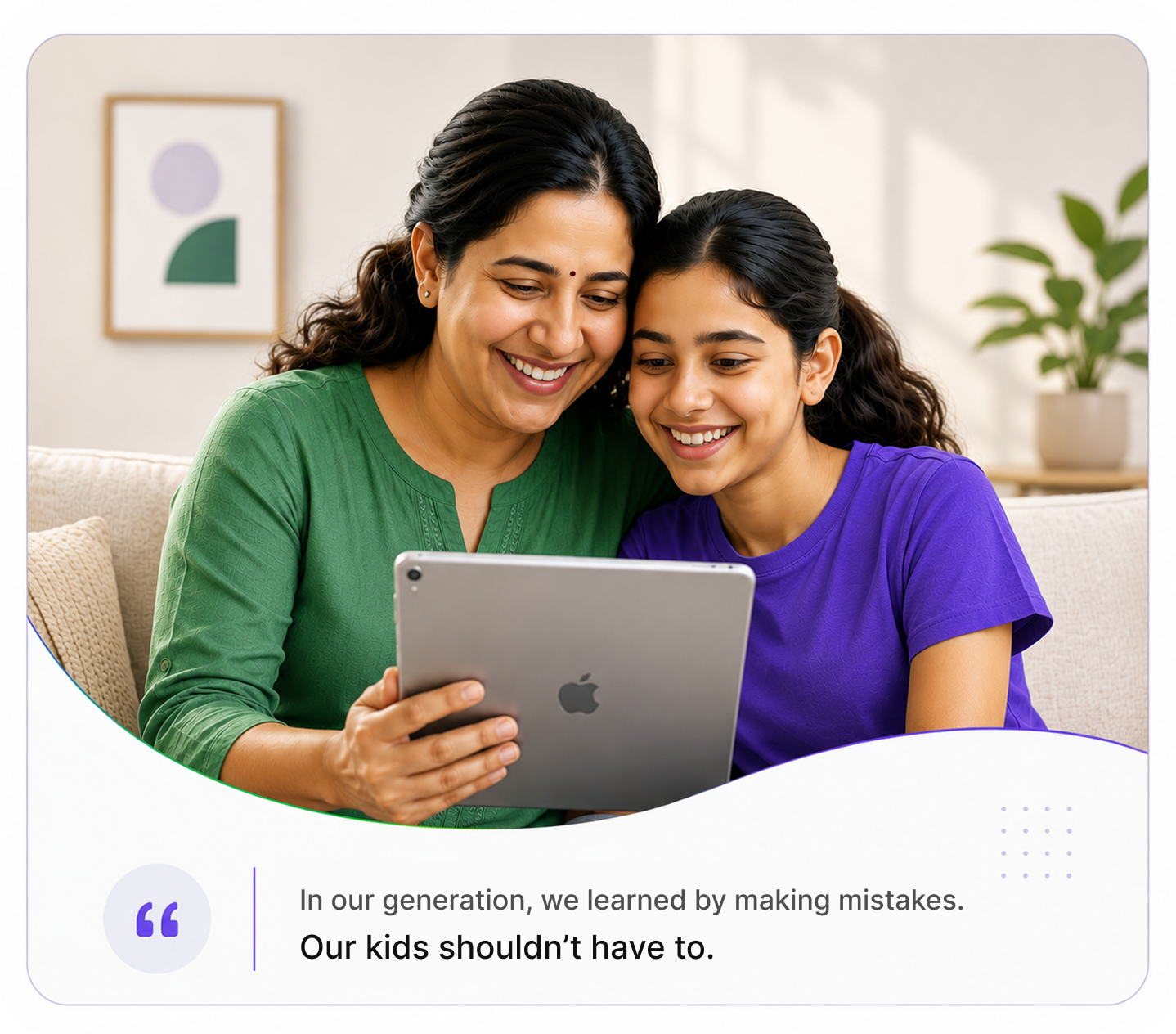
Programs bring parents and students together through shared learning. Take-home activities create money conversations at home, deepening engagement and loyalty.
No faculty training or curriculum development required. Certified facilitators deliver the content. Launch in weeks, not terms.
Pre- and post-assessments measure knowledge gain, behavior change, and attitude shifts. Schools get data dashboards. Parents get progress reports.
Domestic scenarios - post office schemes, UPI transactions, kirana economics, auto-rickshaw pricing. Co-created with classroom educators and SEBI-registered experts.
Students run projects - My Pocket Money Journal, Save for a Dream, Digital India posters. Learning through doing, not lectures.
 Launch your Graphy